Wood Species for Windows – Technical Comparison of 10 Types
The species is not just about aesthetics. It directly influences the thermal conductivity of the frame (λ → Uf → Uw), how well the untreated profile resists the elements, and how much it moves with humidity variations. At SM WOOD, we process 10 species – some from stock, others made to order. The table below compares real figures from the technical data sheets of each species.
Species Comparison – Technical Data
Sorted by λ (thermal conductivity), from the best thermal performer to the lowest. All Uw values in our product sheets are calculated with spruce (λ 0.11 W/m·K) as reference.
|
Species |
λ W/m·K |
Density |
Janka (N) |
Radial Shrinkage |
Durability |
Availability |
|
Spruce |
0.11 |
405 kg/m³ |
1,680 |
3.9% |
Class 4 |
Stock |
|
Accoya |
~0.12 |
515 kg/m³ |
4,100 |
0.7% |
Class 1 |
Exclusive IV92/D92 |
|
Nordic Pine |
0.13 |
550 kg/m³ |
2,420 |
5.2% |
Class 3-4 |
Stock |
|
Meranti LR |
0.13 |
480 kg/m³ |
2,460 |
4.1% |
Class 3-4 |
Standard |
|
Larch |
~0.13 |
575 kg/m³ |
3,290 |
4.2% |
Class 3-4 (EU) / 3 (Sib) |
Made to order |
|
Douglas Fir |
~0.13 |
510 kg/m³ |
2,760 |
4.5% |
Class 3 |
Made to order |
|
Meranti DR |
~0.16 |
675 kg/m³ |
3,570 |
3.9% |
Class 2-3 |
Standard |
|
Ash |
~0.16 |
680 kg/m³ |
6,580 |
5.7% |
Class 4 |
Made to order |
|
Oak |
0.18 |
675 kg/m³ |
4,980 |
4.7% |
Class 2 |
On request |
|
Merbau |
~0.19 |
815 kg/m³ |
7,620 |
2.9% |
Class 1-2 |
Made to order |
|
Afzelia |
~0.19 |
835 kg/m³ |
8,230 |
3.3% |
Class 1 |
Made to order |
How to read the table: Lower λ = the frame loses less heat → more favourable Uf and Uw values. Higher Janka = the surface is more resistant to impact and mechanical wear. Lower radial shrinkage = the profile moves less during humidity variations → better tolerances, fewer sticking issues. Class 1 = most durable when untreated; Class 4 = least durable in our range.
Stock Species – Standard Lead Time
Spruce
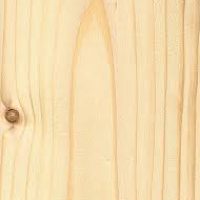
λ 0.11 W/m·K – best thermal coefficient in the range. Density 405 kg/m³ – lightest sash. Radial shrinkage 3.9%. Durability Class 4 – finish mandatory; with 3‑4 layers of Remmers, profiles last for decades. The default choice for nZEB with an opaque finish. Available on all series.
Nordic Pine
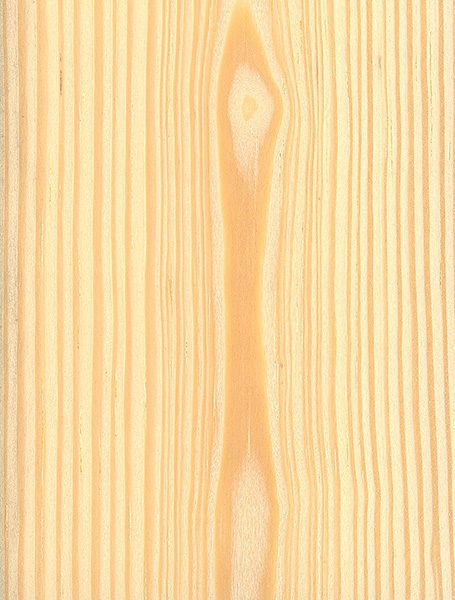
λ 0.13 W/m·K (+0.02 vs spruce). Density 550 kg/m³. Radial shrinkage 5.2%. Janka 2,420 N. High natural resin content – better moisture resistance within the same durability class (3‑4). Grain more pronounced under translucent stains. Permanent stock, same lead time as spruce.
Standard Species – Normal Lead Time
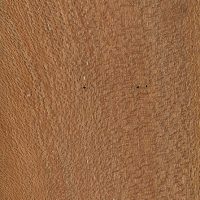
Meranti – Light Red and Dark Red
Two varieties with distinct properties. Light Red: λ 0.13, 480 kg/m³, Janka 2,460 N, radial 4.1%, Class 3‑4. Dark Red: λ ~0.16, 675 kg/m³, Janka 3,570 N, radial 3.9%, Class 2‑3. With an opaque RAL finish, the visual difference disappears – the choice becomes purely technical.
Made‑to‑Order Species – Extended Lead Time
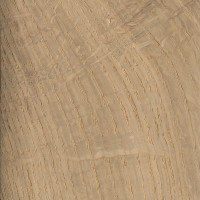
Oak
λ 0.18 W/m·K, density 675 kg/m³, Janka 4,980 N, radial shrinkage 4.7%, Class 2. The standard choice for high‑traffic entrance doors and windows where European grain under translucent stains is part of the design. Not the first choice when lowest possible Uw is critical.
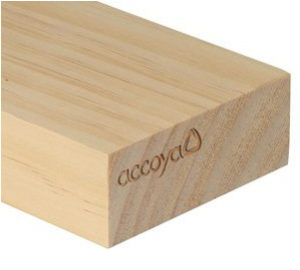
Accoya
λ 0.12 W/m·K (EN 12667). Density 515 kg/m³. Radial shrinkage 0.7% (4‑5× better than spruce). Class 1 durability. Modified wood – Pinus radiata acetylated. Exclusive to IV92/D92. The species for maximum stability and durability with no thermal penalty.
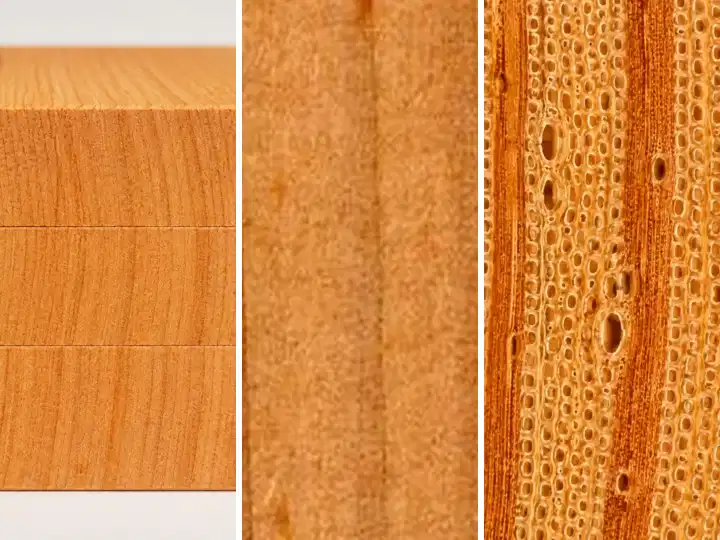
Larch
λ ~0.13 W/m·K. Density 575 kg/m³. Janka 3,290 N. Radial shrinkage 4.2%. Durability Class 3‑4 (European) / Class 3 (Siberian). One of the more durable softwoods in the SM WOOD range. Recommended for mountain altitudes or direct exposure without roof protection.
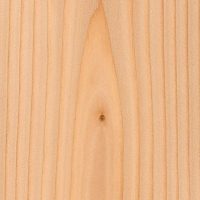
Douglas Fir
λ ~0.13 W/m·K. Density 510 kg/m³. Janka 2,760 N. Radial shrinkage 4.5%. Durability Class 3. MOE 12.17 GPa – stiffest softwood (spruce 9.7 GPa, Nordic pine 10.8 GPa). Superior rigidity reduces deformation in wide sashes and long transoms. Made to order, extended lead time.
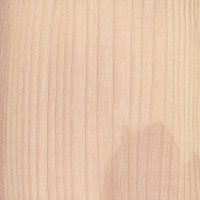
Ash
λ ~0.16 W/m·K. Density 680 kg/m³. Janka 6,580 N – highest Janka hardness among the European species in the SM WOOD range. Radial shrinkage 5.7% – highest in range. Class 4 durability. The paradox: maximum hardness, minimum durability. Finish is non‑optional. Chosen for high‑traffic thresholds where mechanical wear is priority.
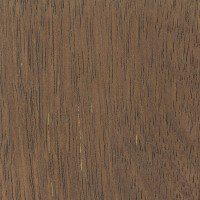
Merbau
λ ~0.19 W/m·K – among the highest in the compared range. Density 815 kg/m³. Janka 7,620 N. Radial shrinkage 2.9% – extremely stable. Class 1‑2. For maximum durability and hardness over thermal performance. IUCN Vulnerable – FSC mandatory.
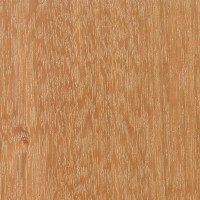
Afzelia (Doussie)
λ ~0.19 W/m·K. Density 835 kg/m³ – heaviest in range. Janka 8,230 N – hardest in entire range. Radial shrinkage 3.3%. Class 1 durability. A step above Merbau in hardness and durability. Interlocked grain makes processing more costly. IUCN: Vulnerable/Near Threatened – FSC mandatory.
How to Choose the Species
Lowest Possible Uw
Spruce (λ 0.11) or Accoya (λ ~0.12). Oak (λ 0.18), Merbau, and Afzelia (λ ~0.19) penalise the frame’s Uf – they are not the choice when Uw is a documented requirement.
Low Radial Shrinkage
Accoya (0.7%) → Merbau (2.9%) → Dark Red Meranti (3.9%). Ash (5.7%) has the highest radial shrinkage in the range.
Natural Durability
Class 1: Accoya, Afzelia → Class 1‑2: Merbau → Class 2: Oak → Class 2‑3: Dark Red Meranti → Class 3: Siberian Larch, Douglas Fir → Class 3‑4: European Larch, Nordic Pine, Meranti LR → Class 4: Spruce, Ash (finish mandatory).
Surface Hardness
Afzelia 8,230 N → Merbau 7,620 N → Ash 6,580 N → Oak 4,980 N → Meranti DR 3,570 N. Spruce at 1,680 N is not suitable for sills or high‑traffic areas.
Short Lead Time + Budget
Spruce or Nordic Pine – permanent stock, shortest execution time in the range.
Visible Grain Under Translucent Stains
Oak (European grain), Dark Red Meranti (reddish‑purple), Afzelia (African golden‑brown). With an opaque RAL finish, all species look identical.