Douglas Fir Wooden windows – Superior Softwood Rigidity
Douglas Fir (Pseudotsuga menziesii) – also known as Oregon Pine – is the most rigid softwood in our range. With a Modulus of Elasticity of 12.17 GPa, it exceeds spruce, Nordic pine and larch, offering minimum deformation for large profiles. Natural Durability Class 3 and excellent dimensional stability complete the picture. Made to order with extended lead times.
Density 510 kg/m³
Medium weight
MOE 12.17 GPa
Most rigid softwood
Durability Class 3
Moderate natural resistance
The Most Rigid Softwood – Less Deformation, More Stability
Douglas Fir delivers a Modulus of Elasticity of 12.17 GPa – the highest among softwoods in our range. For wide profiles or large sashes, this means less elastic deformation under their own weight than spruce or Nordic pine. Natural Durability Class 3 places it on par with Siberian larch, ahead of common European softwoods. Dimensional stability is excellent, with a tangential shrinkage of 7.3% is documented for Douglas fir. A distinct reddish‑yellow grain completes a wood that is as technical as it is expressive.
Technical Data
|
Property |
Value |
|
Density |
510 kg/m³ |
|
Janka Hardness |
2,760 N |
|
Bending Strength |
86.2 MPa |
|
Modulus of Elasticity |
12.17 GPa |
|
Compressive Strength |
47.9 MPa |
|
Radial Shrinkage |
4.5 % |
|
Tangential Shrinkage |
7.3 % |
|
Volumetric Shrinkage |
11.6 % |
|
Thermal Conductivity (λ) |
~0.13 W/m·K |
|
Natural Durability Class |
3 (moderate; susceptible to insects) |
What these figures mean for joinery: The modulus of elasticity of 12.17 GPa is the highest among softwoods in our range – a Douglas fir profile deforms less under its own weight than spruce (9.7 GPa) or Nordic pine (10.8 GPa) for the same section. Tangential shrinkage of 7.3% gives excellent dimensional stability. λ ~0.13 W/m·K places it alongside Nordic pine and meranti for thermal performance. Janka hardness of 2,760 N resists impact better than spruce (1,680 N) and Nordic pine (2,420 N), similar to meranti (2,460 N), though heavy‑traffic thresholds still call for oak or ash.
Performance in Windows
Douglas Fir combines high rigidity with reliable thermal performance and a distinctive warm grain.
1
Thermal
λ ~0.13 W/m·K – identical to Nordic pine, larch and meranti. Exact Uf/Uw values depend on the specific configuration. Exact Uf/Uw values are calculated on request for the specific configuration.
2
Rigidity
MOE 12.17 GPa – the highest among softwoods. The profile resists elastic deformation under its own weight better than spruce or Nordic pine. This matters for wide sashes and long transoms.
3
Finish
Accepts translucent stains with a warm reddish‑yellow tone and distinct darker annual rings. More expressive than spruce, with its own character. Under opaque RAL, visually identical to any other softwood.
Performance Over Time
Class 3 natural durability and low tangential shrinkage make Douglas Fir a predictable performer in real‑world conditions.
Natural Durability
Class 3 – moderate. Untreated heartwood decays outside after years of exposure, compared to 5‑10 years for spruce. Insects susceptibility is managed by the industrial finish.
Maintenance
With 3‑4 layers of Remmers factory finish: maintenance check at 10 years, cleaning and reapplication of a protective coat without stripping. Kept to its maintenance schedule, the structure stays serviceable far longer than the untreated durability of the species suggests.
Dimensional Stability
Tangential shrinkage is 7.3%. The T/R ratio of 1.6 means the wood moves more uniformly with humidity changes – laminated Douglas fir profiles are exceptionally stable.
CNC processing: Douglas Fir produces good results on machinery with a moderate blunting effect – greater than spruce, less than oak. It accepts adhesives and finishes well.
Advantages of Douglas Fir
Advantages
Disadvantages
Comparison with Other Essences
How Douglas Fir compares to the main softwoods in our joinery range.
Douglas Fir vs Spruce
Douglas fir wins on rigidity (MOE 12.17 vs 9.7 GPa), durability (Class 3 vs 4) and dimensional stability. Spruce wins on thermal (λ 0.11 vs 0.13), cost and lead time. For standard nZEB windows, spruce is default; Douglas fir makes sense when rigidity or durability are priorities.
Douglas Fir vs Nordic Pine
Douglas fir is more rigid (MOE 12.17 vs 10.8 GPa) and slightly more durable (Class 3 vs Class 3‑4). Identical λ, similar density. Nordic pine is in stock; Douglas fir is made to order. The choice comes down to structural rigidity and dimensional stability priorities.
Douglas Fir vs Larch
Similar natural durability (Class 3). Rigidity is close (MOE 12.17 vs 11.80 GPa). Larch has higher resin and a reputation for mountain exteriors. Both are made to order. The choice depends on availability and aesthetics – larch is reddish‑yellow, Douglas fir shows more visible annual rings.
Appearance and Colour
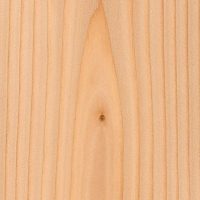
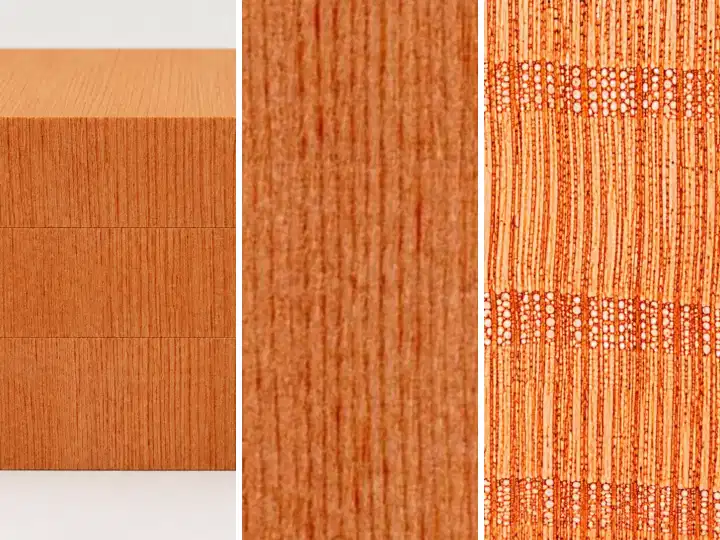
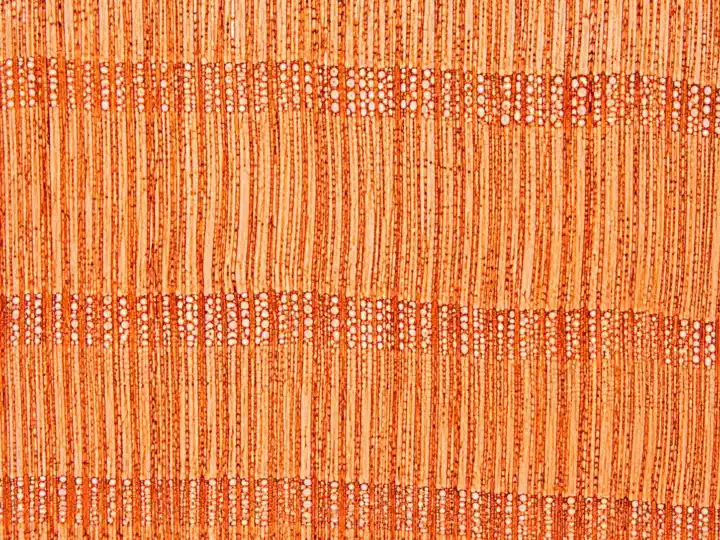
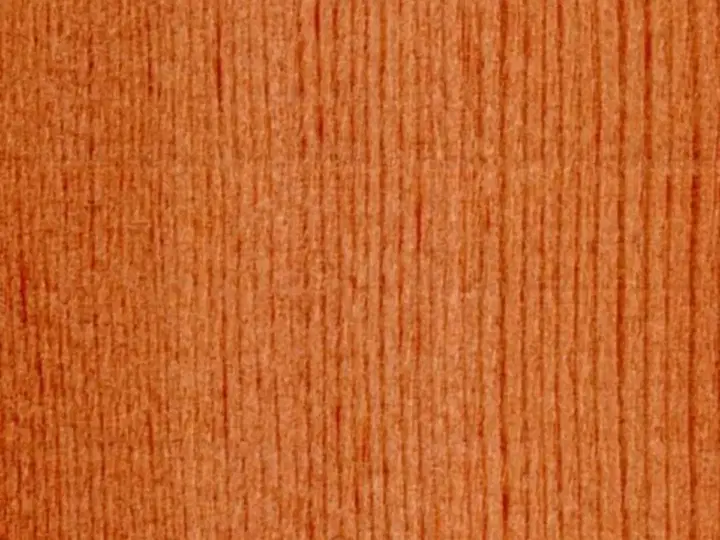
Heartwood is light brown with a reddish‑yellow tint; darker annual rings create a clear contrast. Sapwood is white and well‑defined. Quartersawn sections show a straight, uniform grain; flatsawn sections have a more dynamic pattern. Under translucent stains, the warm reddish‑yellow tone is more expressive than spruce, with its own discreet presence. Under opaque RAL paint, visually identical to any other softwood.
Availability & SM WOOD Execution
Key Details
The price varies depending on profile, opening size and configuration – request a free quotation. For B2B projects: Ud, Uf, Ug and PHPP data provided on request.