Larch Wooden Windows – A Naturally Durable Softwood in our Range
Larch (Larix decidua – European, Larix sibirica – Siberian) is the only conifer in our range that sheds its needles in autumn. Slow growth and a high natural resin content give it strong natural durability among softwoods: Class 3‑4 (European) and Class 3 (Siberian). It is the softwood for extreme exposure – mountain altitudes, driving rain, freeze‑thaw cycles. Not in stock; made to order.
Density 575 kg/m³
Solid softwood
Janka 3,290 N
Higher impact resistance
Durability Class 3
One of the more durable softwoods
A Durable Softwood – Naturally Adapted to Extreme Conditions
Larch grows slowly, developing a dense heartwood saturated with resin. That natural chemistry gives it a durability that no other softwood in our range can match: Class 3 for Siberian larch, Class 3‑4 for European. In the Romanian climate, with a correctly applied industrial finish, larch outperforms spruce and Nordic pine in direct weather exposure, high altitude, and delayed‑maintenance scenarios. It is the softwood you choose when the project demands an extra margin of weather resistance without moving to tropical species.
Technical Data
|
Property |
Value |
|
Density |
575 kg/m³ |
|
Janka Hardness |
3,290 N |
|
Bending Strength |
90 MPa |
|
Modulus of Elasticity |
11.80 GPa |
|
Compressive Strength |
52 MPa |
|
Radial Shrinkage |
4.2 % |
|
Tangential Shrinkage |
8.2 % |
|
Volumetric Shrinkage |
12.5 % |
|
Thermal Conductivity (λ) |
~0.13 W/m·K |
|
Natural Durability Class |
Larix decidua 3‑4 / Larix sibirica 3 |
What these figures mean for joinery: Density 575 kg/m³ – heavier than spruce, noticeable in large sashes. Janka 3,290 N gives larch better impact resistance than Nordic pine (2,420 N) or meranti (2,460 N), though oak remains the choice for high‑traffic thresholds. Radial shrinkage 4.2% ensures good dimensional stability. λ ~0.13 W/m·K sits alongside other medium‑density softwoods; exact Uf/Uw values are calculated on request.
Performance in Windows
Larch brings natural weather resistance and a warm grain to demanding exterior joinery.
1
Thermal
λ ~0.13 W/m·K – identical to Nordic pine and meranti. The Uf‑value of a larch frame meets nZEB requirements. Exact values are calculated upon request for the specific configuration.
2
Natural Durability
The best among softwoods in our range. For mountain homes, driving rain, or intense freeze‑thaw cycles, the extra durability margin over spruce or Nordic pine has practical value.
3
Finish
Larch accepts translucent stains beautifully, producing a warm yellow‑reddish tone that is more expressive than spruce. Remmers Aqua Stopp is verified to work correctly with its resin‑rich surface.
Long‑term Performance
The natural resin content and good dimensional stability make larch a predictable performer for decades.
Natural Durability
Class 3‑4 (European) / Class 3 (Siberian). Untreated larch has moderate natural durability outdoors – compared to 5‑10 years for spruce. The difference becomes relevant with delayed maintenance or extreme exposure.
Resin Content
The natural resin saturates the fibres and creates an additional biological barrier. With a Remmers factory finish, the resin works in tandem with the coating – an advantage over low‑resin softwoods.
Maintenance
10‑year maintenance cycle with 3‑4 layers of Remmers Aqua Stopp. With the finish maintained, the structure outlasts the untreated durability of larch by a wide margin. The tolerance margin for delayed maintenance is higher than for spruce.
A processing note: the high resin content causes buildup on saw blades and CNC machinery, requiring more frequent cleaning than spruce. This does not affect the finished product quality but is reflected in slightly longer lead times.
Advantages of Larch
Advantages
Disadvantages
Comparison with Other Essences
How larch compares to the main softwood and hardwood alternatives.
Larch vs Spruce
Larch wins on natural durability (Class 3‑4 vs Class 4) and hardness (3,290 vs 1,680 N). Spruce wins on thermal (λ 0.11 vs 0.13), cost, and lead time. For mountain projects, larch justifies the investment; for standard nZEB, spruce is more efficient.
Larch vs Nordic Pine
Siberian larch (Class 3) has better natural durability than Nordic pine (Class 3‑4). Nordic pine is more affordable and in stock. Larch makes sense when superior weather resistance is a documented requirement.
Larch vs Oak
Oak wins on durability (Class 2), hardness (4,980 N), and grain expressiveness. Larch wins on thermal (λ 0.13 vs 0.18) and weight. For windows with nZEB targets and good natural durability, larch is more suitable; for high‑traffic entrance doors, oak remains the choice.
Appearance and Colour
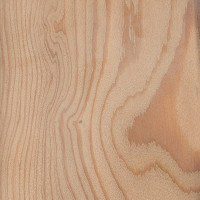
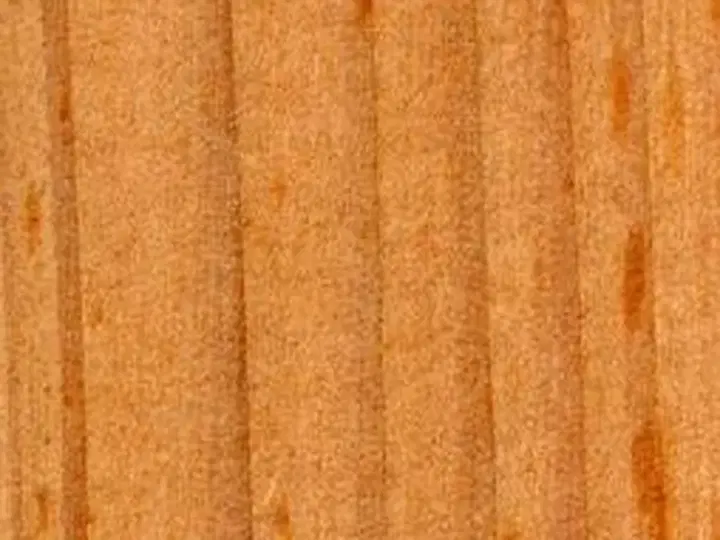
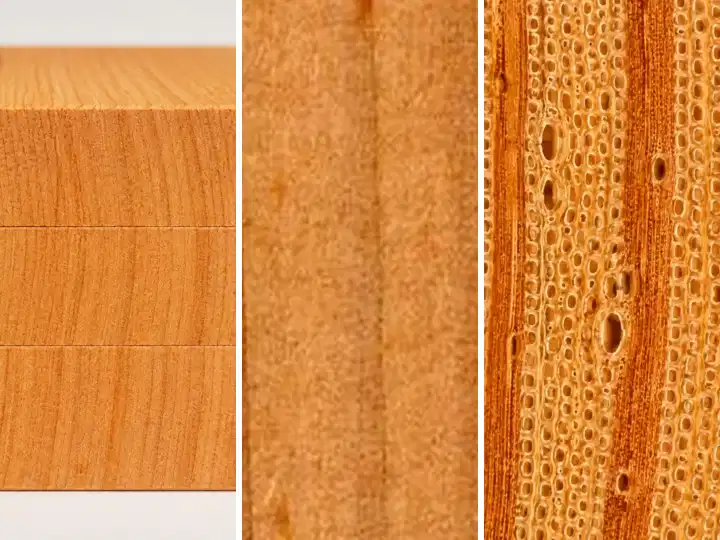
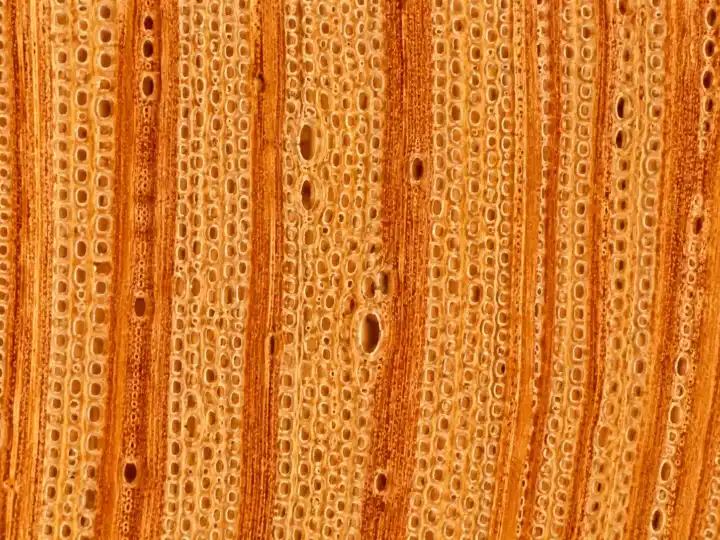
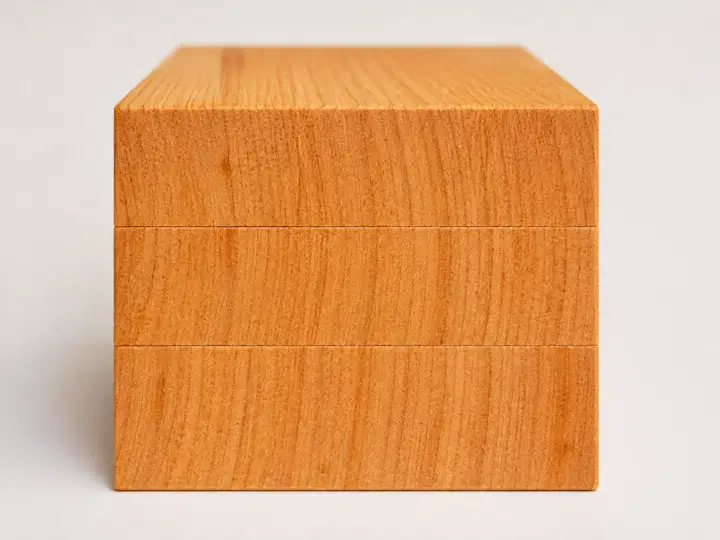
Heartwood is yellow to medium reddish‑brown – a warm tone, highly visible under translucent stains. Sapwood is narrow and almost white, creating a clear contrast. Grain is generally straight or slightly twisted, with a medium‑fine texture and a characteristic oily feel from the high resin content. Under translucent stains, the warm yellow‑reddish tone is more expressive than spruce, yet more discreet than meranti or oak. Under opaque RAL paint, visually identical to any other softwood.
Availability & SM WOOD Execution
Key Details
The price varies depending on profile, opening size and configuration – request a free quotation. For B2B projects: Ud, Uf, Ug and PHPP data provided on request.