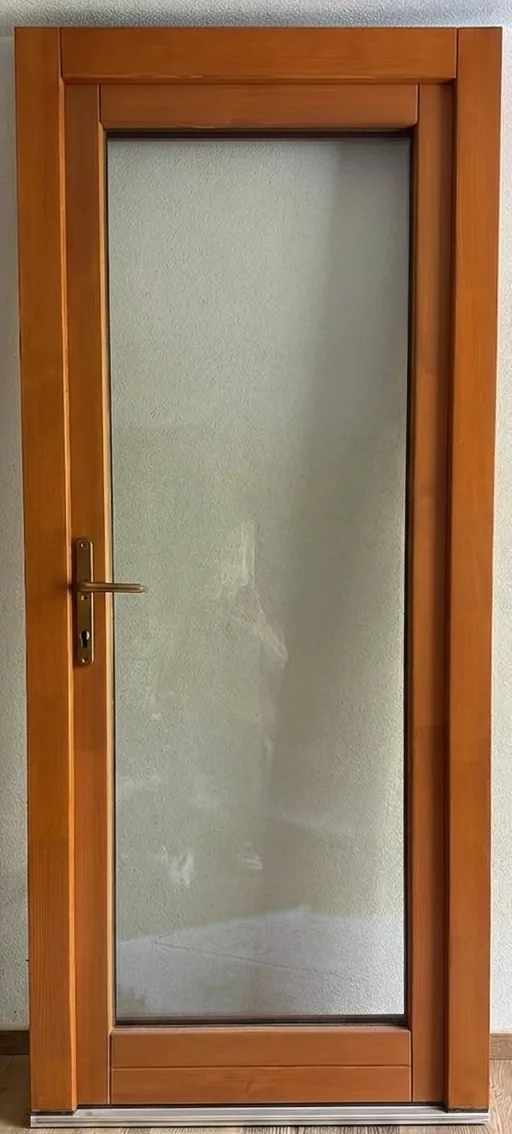
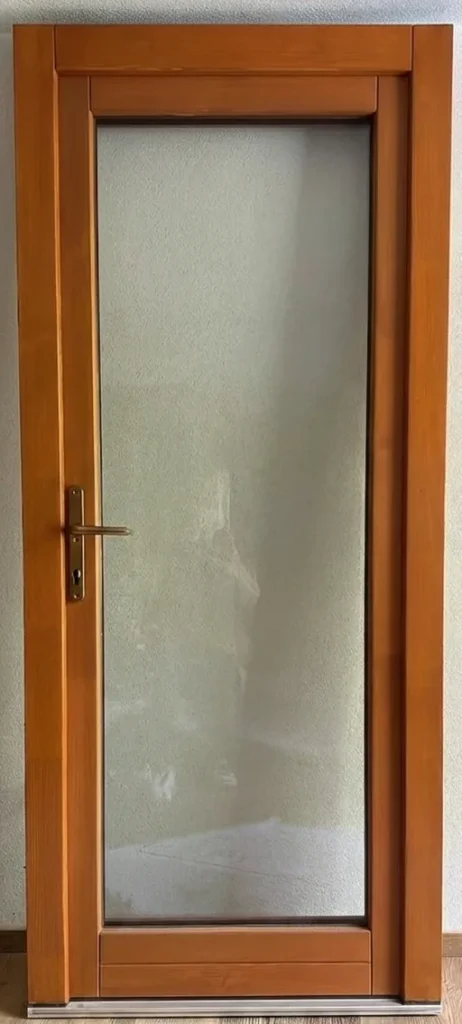
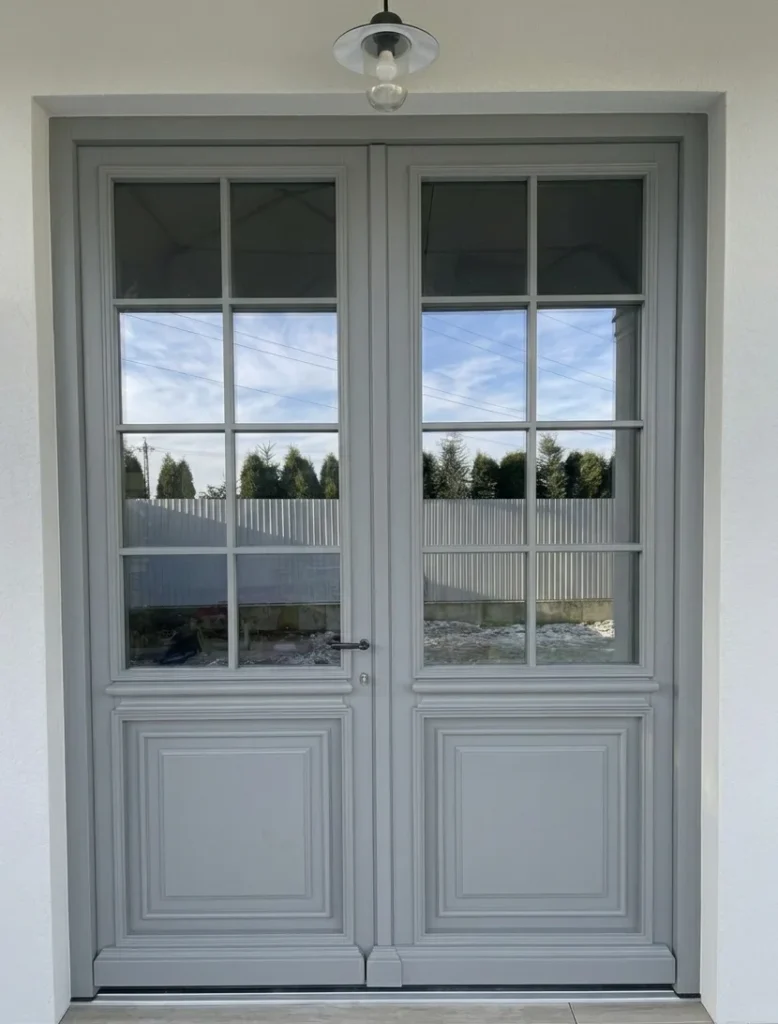
Aluminium-clad wooden doors – D78, D92 and wood-aluminium
· Ud from 0.73 W/m²K · 32-46 dB – Acoustic insulation · 0 – Periodic exterior maintenance Request a Quote Configure the right variant ->
0.73 W/m²K
U-value from
32–46 dB
Sound Insulation
0 – Periodic exterior maintenance
Periodic exterior maintenance
What does wood-aluminium mean for doors
D78 Wood Alu exists in our range because wood and aluminium have complementary properties that no single material covers simultaneously. Wood provides thermal insulation, natural aesthetics, and interior comfort; aluminium ensures permanent resistance to UV and weathering without treatment. Completely independent interior and exterior colours – a combination impossible with a single material.
The difference between variants lies in the aluminium profile and how the glazing is integrated into the door assembly.
All three variants follow the same principle: the laminated wood load-bearing structure ensures thermal insulation and interior aesthetics, while the aluminium cladding or profile on the exterior eliminates the need for periodic treatment. The exterior does not require repainting, does not fade under UV rays, and does not absorb moisture.
All three variants follow the same principle: the load-bearing structure made of laminated wood ensures thermal insulation and interior aesthetics, while the aluminium cladding or profile on the exterior eliminates the need for periodic maintenance. The exterior does not require repainting, does not fade in UV light, and does not absorb moisture.
The difference between the variants lies in the aluminium profile and how the glazing is integrated into the door assembly.
The D78 Wood Alu is part of the range because wood and aluminium have complementary properties that no single material can provide simultaneously. Wood provides thermal insulation, natural aesthetics, and interior comfort; aluminium provides permanent resistance to UV rays and weathering without treatment. Completely independent interior and exterior colours—a combination impossible with a single material.
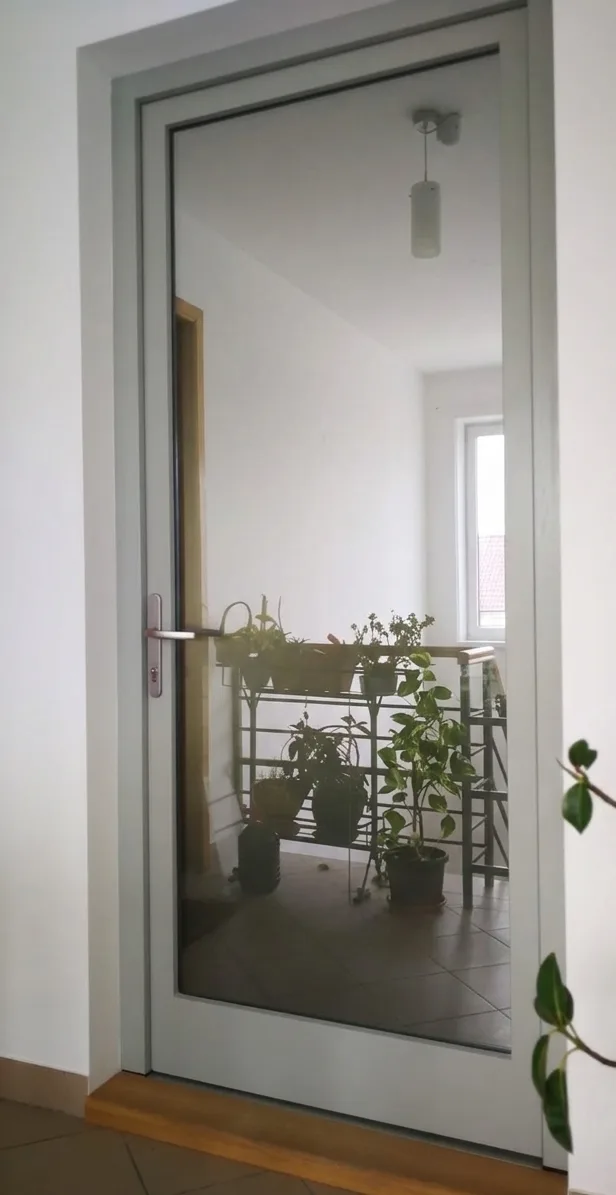
The Three Variants
D78 Soft
Chosen for projects where the exterior must not require periodic maintenance and D78 performance meets the energy requirements.
Overall Ud: 0.93 W/m²K (with triple glazing Ug 0.6 W/m²K). Frame profile 92 × 85 mm. Suitable for projects with nZEB energy requirements.
The base variant: aluminium cladding applied directly to the D78 profile. The wood remains structural and thermal – the aluminium works as exterior protection, not a separate system. The glazing stops at the wood shoulder of the profile.
The basic variant: aluminium cladding applied directly to the D78 profile. The wood retains its structural and thermal properties—the aluminium serves as exterior protection, not as a separate system. The glazing stops at the wooden shoulder of the profile.
Overall U-value: 0.93 W/m²K (with triple glazing Ug 0.6 W/m²K). Frame profile 92 × 85 mm. Compliant with nZEB.
Chosen for projects where the exterior does not require periodic maintenance and the D78’s performance meets the energy requirements.
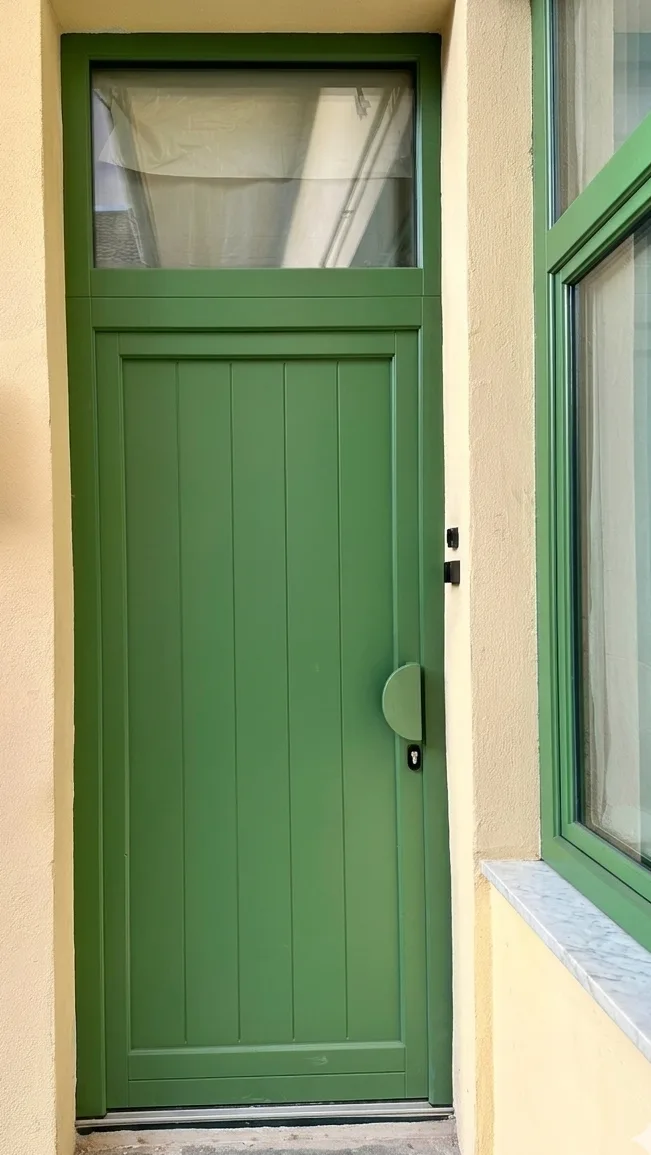
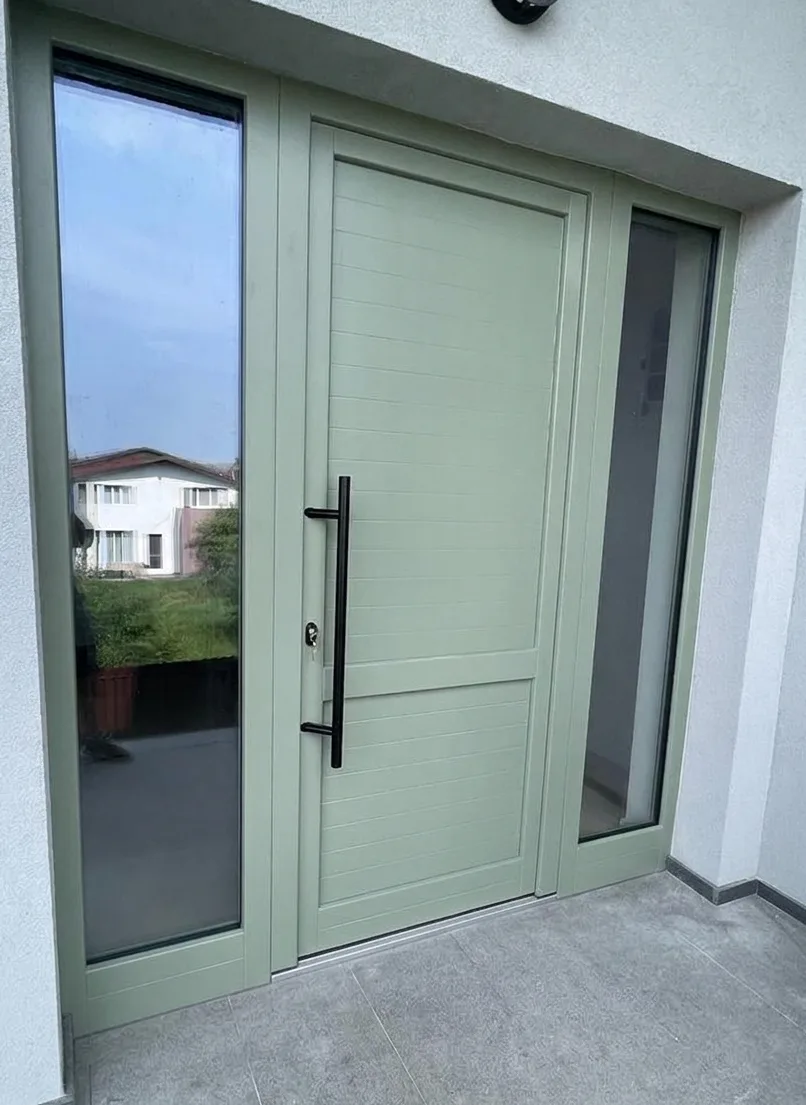
D92 Soft
Overall Ud: 0.73 W/m²K (with triple glazing Ug 0.5 W/m²K) – Passivhaus performance. Chosen for projects with a Ud requirement <= 0.80 W/m²K or maximum insulation, with the advantage of zero exterior maintenance compared to pure wood D92.
The same logic as D78 + cladding, based on the D92 profile. The glazing stops at the wood shoulder. The wood remains structural.
Same logic as D78 + cladding, based on the D92 profile. The glazing rests on the wooden frame. The wood remains structural.
Overall U-value: 0.73 W/m²K (with triple glazing Ug 0.5 W/m²K) — Passivhaus performance. Chosen for projects with PHPP calculations or maximum insulation requirements, with the advantage of zero exterior maintenance compared to the all-wood D92.
D78 Wood Alu – Dedicated Profile
The final Ud is calculated on request based on the specific configuration – solid panel, glazing, and dimensions all influence the result.
A different structural system compared to simple cladding: the glazing stops directly in the aluminium profile, not in the wood shoulder. The aluminium is part of the door structure, not just an exterior finish.
A structural system different from simple cladding: the glazing stops directly in the aluminium profile, not in the wooden jamb. The aluminium is part of the door’s structure, not just the exterior finish.
Available in four variants with different profile insulation levels:
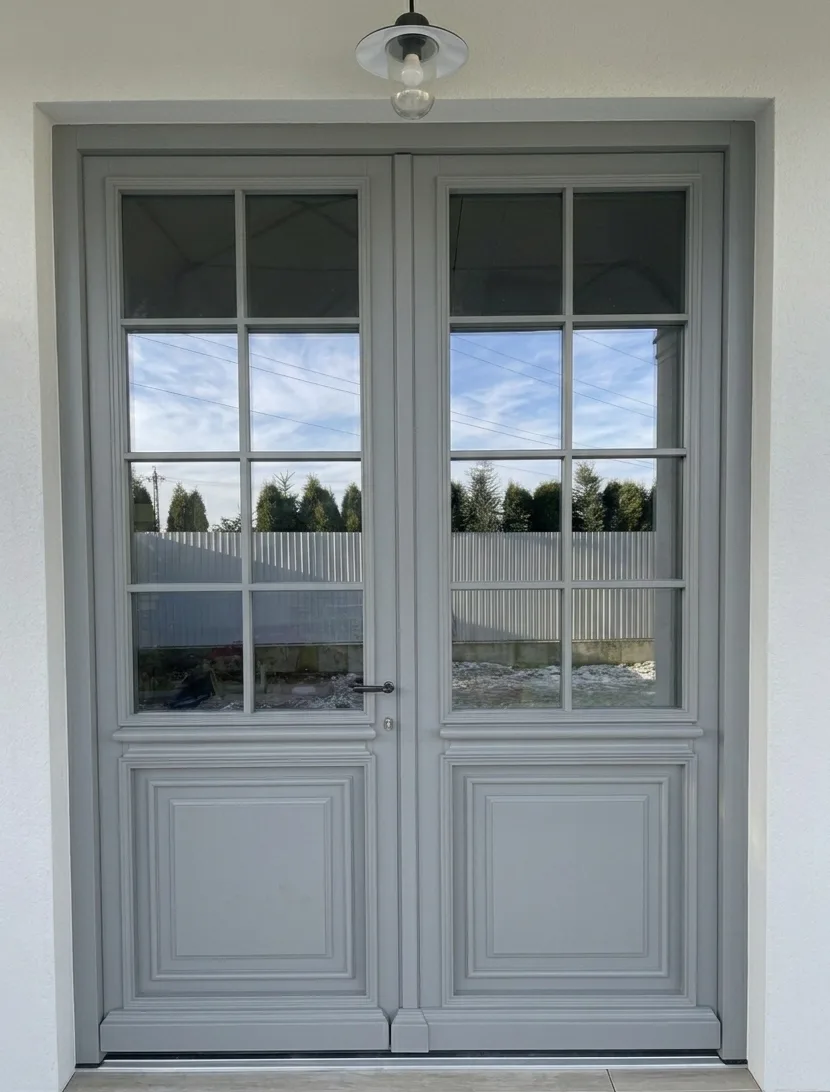
| Variant | Aluminium profile | Frame Uf |
|---|---|---|
| Standard | Gutmann / Uniform | 1.2 W/m²K |
| Coplanar | Gutmann / Uniform, flush with frame | 1.2 W/m²K |
| THERMO | with integrated thermal insulation | 0.82 W/m²K |
| THERMO PLUS | optimized insulation | 0.77 W/m²K |
Technical Specifications Comparison
> "Aluminium cladding on D78 or D92 does not change the Uf of the wood – the thermal structure remains that of the base profile. Aluminium adds a marginal conductivity on the exterior, which is why the Ud of D78+cladding (0.93) is slightly higher than pure D78 (0.90). For D92+cladding, the result is similar, but starting from 0.73 we remain within the Passivhaus zone. For the dedicated Wood Alu profile, glazing in aluminium changes the thermal geometry of the assembly – the values are distinct from simple cladding."
Parameter | D78 + cladding | D92 + cladding | D78 Dedicated Wood Alu |
|---|---|---|---|
Wood base | D78 — 78 mm | D92 — 92 mm | dedicated profile |
Glazing stops at | wood jamb | wood jamb | aluminium profile |
Total frame profile | 92 × 85 mm | on request (variant + config) | on request (variant + config) |
Ud | 0.93 W/m²K | 0.73 W/m²K | on request |
Seals | 3 Q-lon | 3 Q-lon + thermal gap | on request |
Acoustic | 32-42 dB | 32–46 dB | 32–42 dB |
Standard hardware | Roto DoorSafe 5-point + Simonswerk Baka | Roto DoorSafe 5-point + Simonswerk Baka | on request |
Security | RC2 | RC2/RC3 | on request |
Standard threshold | Gutmann aluminium | Gutmann with thermal break | on request |
Exterior maintenance | none | none | none |
Independent interior/exterior colours | yes | yes | yes |
Warranty | 5 years | 5 years | 5 years |
Lead time | 8–12 weeks | 8–12 weeks | on request |
Aluminium cladding on D78 or D92 does not change the Uf of the wood – the thermal structure remains that of the base profile. Aluminium adds a marginal conductivity on the exterior, which is why the Ud of D78+cladding (0.93) is slightly higher than pure D78 (0.90). For D92+cladding, the result is similar, but starting from 0.73 we remain within the Passivhaus zone. For the dedicated Wood Alu profile, glazing in aluminium changes the thermal geometry of the assembly – the values are distinct from simple cladding.
Advantages of the wood-aluminium system
The interior remains wood, visible and finished completely independently from the exterior. The interior face is in a controlled environment – the refinishing interval reaches 7-10 years compared to 3-5 years for directly exposed wood. Anthracite Grey RAL 7016 exterior, transparent lacquer on spruce inside: a combination impossible with a single material.
Electrostatic paint on aluminium does not peel, does not absorb moisture, and does not expand seasonally. The RAL colour remains uniform – looking the same after 10 years as it did after 1, with no differential degradation between exposed and shaded areas. Zero periodic treatment, without exceptions.
Aluminium exterior — lasting performance:
Wood interior — independent aesthetics and finish:
Available wood species
Available species: spruce, pine, meranti, oak – larch, douglas fir, ash (made to order with longer lead times). Orders with spruce or pine are delivered in the shortest time.
– Spruce – ideal for RAL opaque finish, optimal thermal coefficient – Pine – similar properties to spruce, slightly more pronounced grain – Meranti – dimensionally stable, natural moisture resistance – Oak – chosen for transparent lacquer when the grain must remain visible; higher Ud – Larch – natural hardness, recommended for mountain altitudes. Made to order. – Douglas Fir – approx. 0.13 W/m·K, reddish-brown grain with fine texture, works well with transparent lacquer. Made to order with extended lead time. – Ash – ~0.16 W/m·K, straight creamy-white grain, Janka hardness 6,580 N. Made to order with extended lead time.
The interior is wood and remains visible. For the aluminium-clad variant, the chosen species exclusively influences the aesthetics and interior Uf – the exterior is protected by aluminium regardless of the species.
The interior is wood and remains visible. For the aluminium-clad variant, the chosen wood species influences only the aesthetics and the interior Uf coefficient — the exterior is protected by aluminium regardless of the species.
Available wood species: spruce, pine (standard for cladded versions). For the dedicated Wood Alu profile: (availability to be checked).
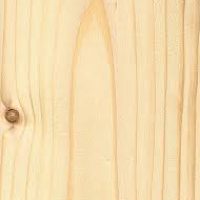
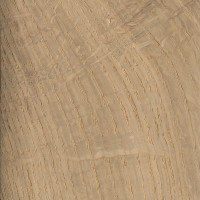
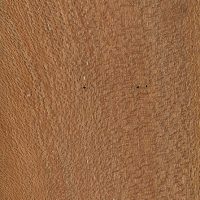
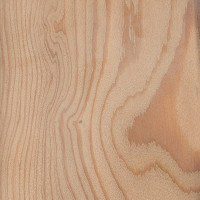
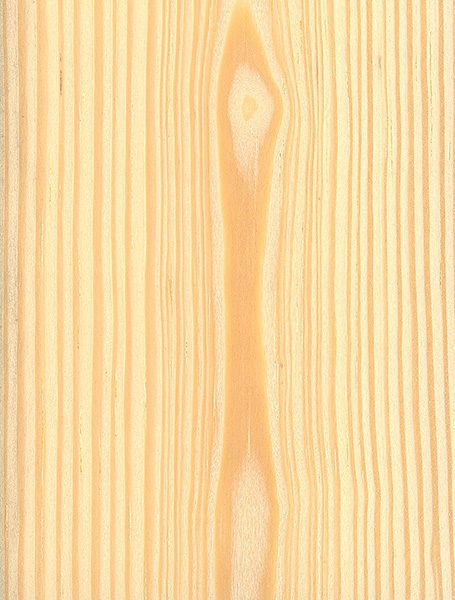
Spruce – ideal for RAL opaque finish, optimal thermal coefficient
Pine – similar properties to spruce, slightly more pronounced grain
Meranti – dimensionally stable, natural moisture resistance
Oak – chosen for transparent lacquer when the grain must remain visible; higher Ud
Larch – natural hardness, recommended for mountain altitudes. Made to order.
Douglas Fir – approx. 0.13 W/m·K, reddish-brown grain with fine texture, works well with transparent lacquer. Made to order with extended lead time.
Ash – ~0.16 W/m·K, straight creamy-white grain, Janka hardness 6,580 N. Made to order with extended lead time.
Custom configuration
Request a Quote -> Technical consultancy – architects and designers
Available options: – Exact dimensions according to the existing opening – Single or double leaf (up to 1800 mm width) – Triple Low-E glazing, insulated solid panel, or mixed configuration – Any RAL colour for the exterior (aluminium) + any RAL / NCS colour for the interior (wood) – RC2 security (D78+cladding) or RC2/RC3 (D92+cladding) – Gutmann aluminium threshold with thermal break (standard on D92)
Available options: